
Let It Sink In
Reverend Philip Stringer
Matthew 13:1-9, 18-23
LET US PRAY: Lord of Life, Give us ears to hear and hearts willing to receive, that your word may be food for our lives and a blessing to the world. AMEN
“If you have ears to hear, listen.” Of course, the people to whom Jesus was speaking had ears. They just weren’t using them.
I read once that a person typically must hear something seven times before they begin to take notice, and then must hear it several more times before it begins to sink in. That’s why advertisers don’t just play a commercial once on TV and radio, but they play it over and over again so it will sink in.
You and I have heard the parable of the sower many times. We may even have heard the explanation of the parable many times. Regardless, the message of the parable of the sower — and in truth, all of scripture — needs to be heard over and over again for its meaning to soak in. That seems especially fitting for this parable that uses the imagery of a farmer and seeds and soil.
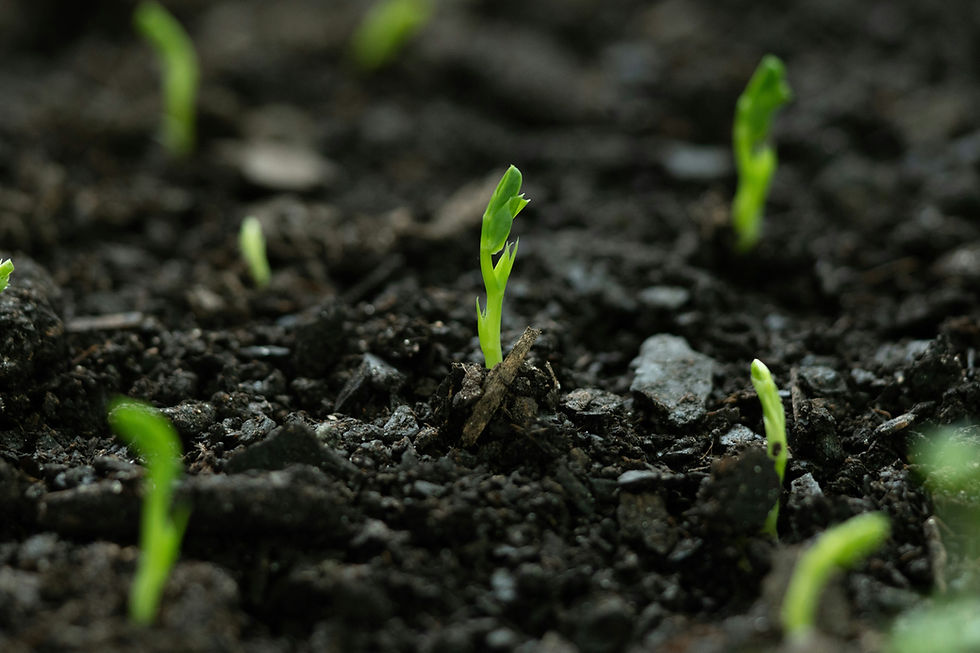
Jesus explains to his disciples where they fit into the parable. They aren’t the farmer or the seed. They (and we) are the soil. And he tells them that the Word of God cannot grow on rocky ground — or what does grow there quickly withers. It is only on good soil which is clear and open where a planted seed will grow to maturity.
You and I are the ground. So naturally, the question arises: what kind of ground am I? What kind of ground are we? What kind of ground are you?
Is there such a thing as good ground or bad ground?
Anyone with eyes can see that there is a difference between the open beaches of the North Carolina coast to our east and the forests of the mountains to our west. At Valparaiso University where I earned my undergraduate degree in biology, the first forest succession studies were conducted over a century ago. In northwest Indiana, we were far from the Atlantic coast — but what you may not know is that on the southern shores of Lake Michigan there are sand dunes. The Valparaiso Moraine is a geologic feature creating a raised region around Lake Michigan that was produced by the repeated ebb and flow of the glaciers over thousands and thousands of years.
On the beaches is very poor soil — just ground up rock and shell, lacking much mineral substance. It is minerals — elements which make soil good, right?
Little or nothing grows along the shoreline, right? In the desert southwest the land is full of minerals and nutrients — but it is mostly tied up in rocks — small stones and giant boulders. At one time places such as Arizona were dense, swampy forests. Today we can see the evidence of that in rocks and petrified wood. In fact, petrified wood was made by minerals seeping into dead wood and eventually compacting into rock. The minerals in such rock are tied up; it is useless to any plant that would try to grow from it.
And so, it is minerals/elements that are finely ground which make good soil, right?
In the Midwest where I grew up — there is lots of good soil. Rich, dark, nutrient soil. Actually, it isn’t really ours. It is mostly Canada’s. Then the glaciers came, they worked as giant bulldozers, pushing a mountain of soil before them. But it isn’t all from Canada. Much of the rich soil we have in Indiana was created by great boulders being ground into dust by the action of the glaciers. Till up the ground and it looks like a giant chocolate bar — rich and dark with minerals and organic materials. And the farther from the shores of Lake Michigan you go, the richer it gets. In North Carolina you have to drive for hours to see the difference, but in Indiana you can literally walk through the stages of maturing forest in less than an hour.
Along the shore is barren sand. Then come foredune grasses which begin to catch organic materials and minerals so that other species can grab hold. After the grasses come conifers — pines. Then come soft woods like aspens and cottonwoods. Behind them come heartier trees like beeches and maples. And finally, beyond them is the most mature forest, consisting of hardwood trees like oaks and hickories. These forests require graduating types of soil — from nearly barren to rich and dark.
But even with the best soils you won’t get growth without something else. This year the corn doesn’t look too good. The fields in Indiana should be bright green with corn that is at least waist high — but it’s not. And the same is true here. And the problem is clear to everyone — not enough rain.
All soils — both good and bad — will likely be able to sustain some type of plant life if it gets regular rain. But no land — not even the richest, darkest soil can support life if there is no rain. And, in fact, it is actually rather that dissolves or erodes rocks (and even mountains!) and turns them into fertile soil.
So what is it that REALLY makes good soil? Water.
OK — That’s enough geology and biology for the moment. Now let’s look at me and you; people who recognize that we are the creation of God. We look back to the parable that Jesus told about the sower. we know that the seed in the story is the Word of God— and we know that we are the ground — created by God to hold and nourish the seed. But what is it that makes us fertile soil, rather than rocky soil?
What is it that makes a mountain of rock into a plain of rich soil? Water.
In our first reading today, Isaiah writes, “as the rain and the snow come down from heaven and do not return there until they have watered the earth, making it bring forth the sprout, giving seed to the sower and bread to the father, so shall my word be that goes out from my mount; it shall not return to me empty…”
And in our psalm for today, Psalm 65 is identified by scholars as one belonging to a group of psalms categorized as “Thanksgiving songs of the community.” This particular psalm was part of the liturgy of the people who worshipped in Jerusalem. Verses 2 and 3 read, “To you that hear prayer shall all flesh come, because of their transgressions. Our sins are stronger than we are, but you will blot them out.” Or more accurately, “our sins are stronger than we are, but you forgive them.”
Isn’t that a wonderful statement! What we have here is a confession of sins by the worshipping body of Israel, and a recognition of the grace of God shown to them in forgiveness.
The Hebrew word translated here as “blot out” or “forgive,” actually means to cover over — or blanket — and by doing this, the transgression is robbed of its power. So, the sin is not set aside — it is covered — smothered by the grace of God. Like a rain that soaks the soil, the grace of God is poured out upon us.
Understanding that the water which flows is the grace of God, and that the earth that receives it is an image for us, listen again to verses 9-11 of Psalm 65:
“You visit the earth and water it abundantly; you make it very plentious; the river of God is full of water. You prepare the grain, for so you provide for the earth. You drench the furrows and smooth out the ridges; with heavy rain you soften the ground and bless its increase."
With heavy rains of Grace, God softens the ground and blesses its increase. You see now that, even as the richest soils are useless without water, no person can nurture and bring forth the Word of God without the Grace of God working upon that person first — and even as the ridges are smoothed out by the rain, there is no quality of person — whether they be rocky and tough, or rich and soft — who is not also worked upon by the Grace of God. And even, then, when they are worked into fertile soil, they continue to need the Grace of God — just as rich farmland must have water.
There is the Gospel: No matter how fine and rich we are, we are useless — worthless without the Grace of God. And the good news is that the Grace of God is not withheld from us. As the Psalmist wrote: "the river of God is FULL of water." There is no bottom or shore to the grace of God. It rains upon us and soaks us thoroughly.
And since the image of water and rain is fresh in our mind as the Grace of God, let me remind you of your Baptism. For it was in your baptism that the Grace of God was poured across your head, covering your sins and forever soaking you with the Holy Spirit.
It was the grace of God which caused Jesus to take the burden of our sins upon himself. We are marked with his blood therefore. The blood of Christ covers us all — it soaks us like a rain — into the core of who we are.
A sower went out and sowed seeds. And the only place where that seed prospered was upon soil that was full of the Grace of God. And from this seed many more of the same seed were brought forth and sent further upon the earth.
We are forever and continuously receivers of the Grace of God through Jesus Christ and the Holy Spirit. It is to us like water upon parched land. You have also received the Word of God — like a seed. And when you leave here, the Word will go with you. Think about it, then, when you go home. Let that sink in. And may the word of God sown in you bear fruit in the power of God’s grace, that those around you may be fed with its fruit.
AMEN


Comments